Optimize Value Flow in Local Business Strategy
Local Business Strategy, Value Flows, Customer Retention
Part 2 - PASS Operating Manual v1 – How Value Flows Through Your Local Business
Understanding how value flows through your business is the foundation for sustainable growth, stronger customer relationships, and deeper community impact. This guide breaks down Part 2 of the PASS Operating Manual v1 into practical steps local businesses can apply immediately.
1. Value Flows: Seeing Your Business as a System
Every local business, whether a café, clinic, agency, or trades service, is more than a set of transactions. It is a system of Value Flows – the way time, attention, trust, information, and money move between you, your customers, your team, and your community. When these flows are clear and intentional, the business becomes easier to manage and easier to grow.
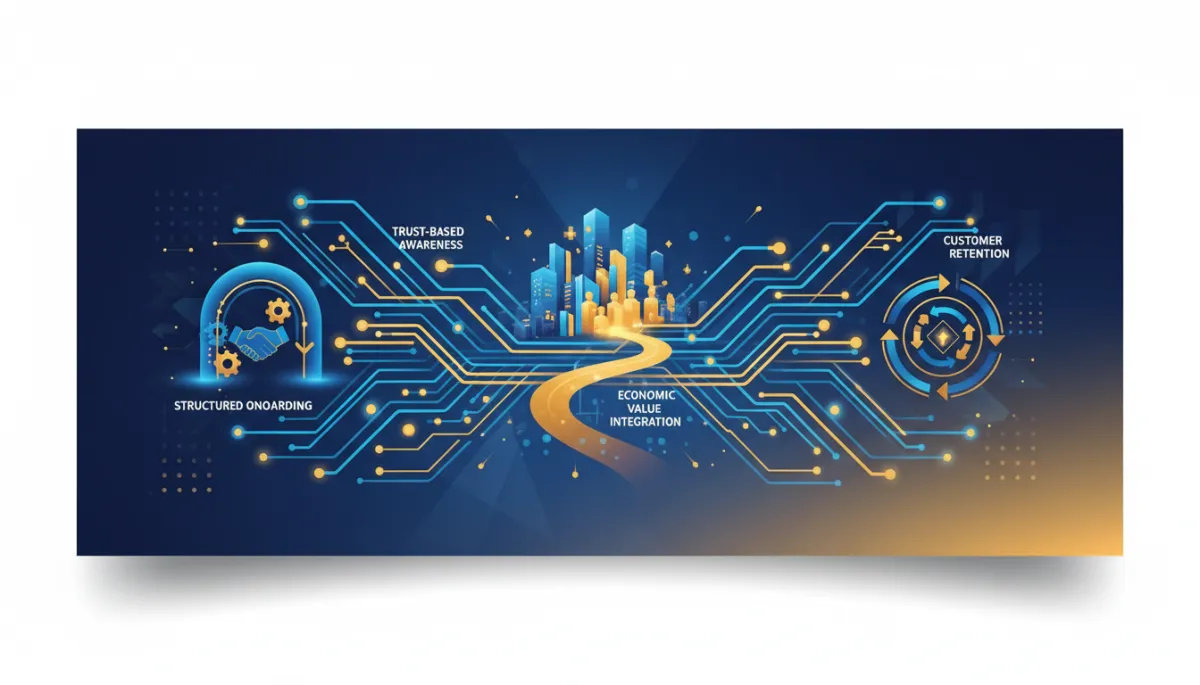
At a basic level, value enters your business as awareness and interest, is developed into commitment and payment, and then continues as loyalty, advocacy, and referrals. Gaps or friction in any of these stages cause leaks: lost leads, poor experiences, or missed opportunities for Economic Value Delivery. Mapping these flows forces you to ask, step by step: “What value does the customer receive here, and what value do we receive in return?”
A practical way to start is to diagram the journey from first contact to loyal customer. For each stage, list:
What the customer gives (time, data, money, feedback, referrals)
What the customer receives (clarity, reassurance, results, status, convenience)
What the business gains (revenue, insight, reputation, repeat business)
When Value Flows are visible, you can manage them deliberately instead of reacting to problems as they appear. This is the core of the PASS Operating Manual approach: make value movement explicit, then optimize it.
2. Trust-based Awareness: Attracting the Right Attention
Most local businesses focus heavily on visibility – more posts, more ads, more promotions. However, the PASS framework emphasizes Trust-based Awareness instead of simple reach. The objective is not just to be seen, but to be seen as reliable, relevant, and aligned with your community’s values from the first interaction.
Trust-based Awareness means your marketing and outreach already deliver value before any money changes hands. Educational content, transparent pricing, clear expectations, and honest stories about your business build a foundation of credibility. When potential customers arrive with trust already forming, every subsequent step in the Value Flow becomes smoother: sales cycles shorten, price sensitivity decreases, and objections are easier to address.
For example, a local physiotherapy clinic might publish short guides on injury prevention, explain treatment options in plain language, and share anonymized case studies. These actions are not “free extras”; they are deliberate investments into the trust reservoir that feeds future Economic Value Delivery. The more you give in clarity and honesty upfront, the more qualified and confident your leads become.
💡 Pro Tip: Audit your website, social profiles, and printed materials. Ask, “Does this build trust, or just demand attention?” Adjust anything that feels vague, pushy, or unclear.
3. Structured Onboarding: Turning Interest into Committed Customers
Once someone decides to try your business, the next critical Value Flow is onboarding. Structured Onboarding is the process of guiding new customers from “I am curious” to “I know exactly what to expect and how to get value here.” For local businesses, onboarding is often informal and inconsistent, which creates confusion and missed revenue opportunities.
A structured approach defines clear steps, responsibilities, and communications. It might include:
A standard welcome message or pack that sets expectations and next steps
A simple checklist for staff to follow for every new customer or project
Clear timelines: when the customer will hear from you, what information you need, and what you will deliver
Early wins: small, fast results that prove they made the right decision
For example, a marketing agency working with local restaurants could use a three-step onboarding flow: discovery call, strategy outline, and launch checklist. Each step is documented and communicated with dates and responsibilities. This structured approach reduces anxiety for the client, saves time for the team, and ensures that the Value Flow from interest to implementation is consistent and reliable.

Clear, repeatable onboarding steps reduce confusion and accelerate early wins for new customers.
4. Economic Value Delivery: Making the Exchange Tangible and Repeatable
At the heart of every local business is Economic Value Delivery – the moment when the customer receives the outcome they paid for, and you receive revenue in return. In the PASS Operating Manual, this stage is treated as a designed experience, not just a transaction. The goal is to make value obvious, measurable, and repeatable for both sides.
To strengthen this part of the Value Flow, consider three questions:
How do we define success in words the customer understands?
How do we demonstrate that success has been achieved?
How do we capture and communicate the economic impact over time?
A bookkeeping firm, for instance, might go beyond delivering accurate reports. They could provide a quarterly summary that highlights cost savings, improved cash flow, and reduced risk in clear numbers. This turns invisible work into visible value and prepares the ground for price increases, cross-sells, or longer-term agreements. When customers can see the economic value in front of them, they are far more likely to stay and invest more deeply.
5. Customer Retention: Extending the Value Flow Beyond the First Sale
In many local businesses, the majority of profit comes from repeat customers rather than first-time buyers. That is why Customer Retention is a central element of the PASS Operating Manual. Retention is not only about loyalty cards or follow-up emails; it is about designing the ongoing Value Flow so that staying with you is easier and more rewarding than switching to someone else.
Effective retention strategies build on the earlier stages: Trust-based Awareness attracts aligned customers; Structured Onboarding creates confidence; Economic Value Delivery proves results. Retention then adds regular check-ins, proactive recommendations, and personalized offers that acknowledge how the customer’s needs evolve over time. The Value Flow becomes cyclical rather than linear: each successful delivery sets up the next engagement.
Consider a local IT support company. Instead of waiting for clients to call when something breaks, they schedule routine reviews, share simple security tips, and provide quarterly health reports on systems. These touchpoints reinforce trust, demonstrate ongoing value, and make it natural to renew contracts or upgrade services. Retention is no longer a negotiation; it is the logical outcome of a well-managed Value Flow.
6. Community Integration: Expanding Value Flows Beyond Your Walls
Local businesses do not operate in isolation. They are part of a wider ecosystem of suppliers, partners, residents, and institutions. Community Integration recognizes that Value Flows extend beyond direct customers. When you intentionally contribute to and draw from your local community, you create additional layers of resilience and opportunity that purely transactional businesses cannot match.
Community Integration might involve collaborating with neighboring businesses on joint promotions, participating in local events, mentoring young entrepreneurs, or sourcing from local suppliers. Each action builds relational capital – a form of trust that supports future Economic Value Delivery. When your business is seen as an active contributor to local wellbeing, customers are more inclined to choose you, forgive occasional mistakes, and recommend you to others.
For instance, a neighborhood café might host community meetups, showcase local artists, and partner with nearby shops for cross-discounts. The immediate revenue from any single initiative may be modest, but the long-term Value Flow – in reputation, loyalty, and word-of-mouth – can be substantial. Community Integration turns your business from a standalone service into a valued local institution.
Bringing It All Together: Designing How Value Flows in Your Business
Part 2 of the PASS Operating Manual v1 – “How Value Flows” – is ultimately an invitation to step back from day-to-day firefighting and look at your local business as a designed system. Value Flows, Trust-based Awareness, Structured Onboarding, Economic Value Delivery, Customer Retention, and Community Integration are not separate projects. They are interlocking components of one continuous journey that customers and partners take with you.
For local businesses, the advantage lies in proximity and relationships. You are close to your customers, you understand the local context, and you can adapt faster than large, distant competitors. By making your Value Flows explicit and intentional, you turn that proximity into a strategic asset. You know who you serve, how they discover you, how they are welcomed in, how they receive value, and how they remain connected over time.
The next step is practical: schedule time with your team to map your current flows from awareness to community impact. Identify friction points, design small improvements, and implement them consistently. Over time, you will see clearer communication, smoother operations, more predictable revenue, and a stronger position within your local ecosystem. That is the promise of the PASS Operating Manual in action: a business where value flows reliably – to your customers, your community, and your bottom line.