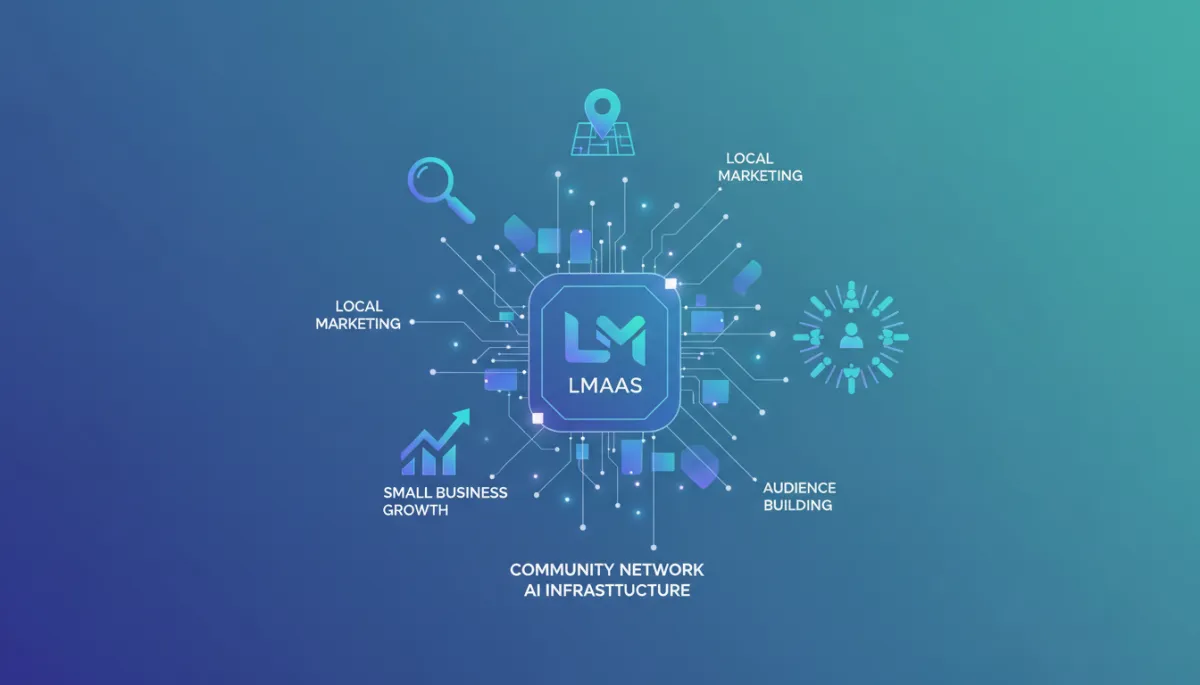
LMaaS: Boost Local Marketing & Business Growth
Marketing Strategy, LMaaS, Local Marketing, Small Business Growth
LMaaS: The New Engine of Local Marketing and Small Business Growth
As local markets become more competitive and digital channels more complex, businesses and agencies are turning to LMaaS—Local Marketing as a Service—to plan, execute, and scale campaigns with greater precision. Powered by modern AI infrastructure and rooted in community networks, LMaaS is rapidly becoming the backbone of sustainable audience building and small business growth.
What Is LMaaS and Why It Matters Now
LMaaS, or Local Marketing as a Service, is a managed, end-to-end solution that combines strategy, technology, and execution to help brands win in specific geographic markets. Instead of piecing together separate tools for ads, email, listings, and analytics, LMaaS provides a unified framework that agencies and businesses can rely on to coordinate every aspect of their local marketing efforts.
In practice, LMaaS platforms and providers handle campaign planning, creative production, channel management, optimization, and reporting across local search, social, display, and offline touchpoints. For multi-location brands and regional agencies, this model reduces operational complexity while ensuring consistent brand execution in each neighborhood, town, or city they serve. For smaller businesses, LMaaS offers enterprise-grade marketing capabilities without the burden of building and maintaining their own AI infrastructure or in-house media teams.
From Advertising to Audience Building: A Strategic Shift
Traditional local advertising focused on short bursts of visibility: flyers, local radio, seasonal promotions, and basic search ads. LMaaS reframes the goal from short-term exposure to sustained audience building. The objective is not simply to reach people in a radius, but to identify, nurture, and retain the right customers within a specific community over time.
By integrating data from multiple touchpoints—website visits, store check-ins, social engagement, loyalty programs, and reviews—LMaaS providers can build rich local audience profiles. Campaigns are then tailored to these segments, delivering relevant messages at the right moments, whether that is a welcome offer for new residents, a re-engagement email for lapsed customers, or a time-sensitive promotion aligned with local events. This ongoing, relationship-centric approach is what drives predictable small business growth rather than sporadic spikes in traffic.
The Power of Community Networks in Local Marketing
A defining strength of LMaaS is its emphasis on the community network surrounding a business. Local customers rarely make decisions in isolation; they are influenced by neighbors, local influencers, business associations, and digital communities anchored to a specific place. LMaaS models recognize this and build strategies that tap into those networks rather than treating each customer as an isolated data point.
For agencies, this means structuring campaigns that involve local partnerships, co-branded events, and cross-promotions among businesses serving complementary audiences. For example, a fitness studio might collaborate with a nearby healthy café and a local wellness blogger to co-create content and offers. LMaaS platforms can orchestrate these collaborations at scale, ensuring that messaging, tracking, and attribution are consistent across all participants in the community network. The result is deeper trust, stronger word-of-mouth, and more resilient customer relationships.

Strong community networks amplify local marketing impact and reduce acquisition costs over time.
AI Infrastructure: The Engine Behind LMaaS Performance
Modern AI infrastructure is what elevates LMaaS beyond traditional managed marketing services. AI systems ingest and process large volumes of data—from ad platforms, CRM systems, point-of-sale records, and geolocation signals—to uncover patterns that would be invisible to manual analysis. This intelligence drives everything from audience segmentation and budget allocation to creative testing and channel mix optimization in local marketing campaigns.
For example, AI models can predict which neighborhoods are most likely to respond to a new product launch, identify which time slots deliver the highest conversion rates for local search ads, or determine which creative concepts resonate with a specific demographic cluster. Over time, as the AI infrastructure learns from ongoing campaign data, it continuously refines targeting and messaging, allowing agencies and businesses to achieve more impact with the same or smaller budgets. This level of precision is particularly valuable in local markets, where audience sizes are finite and wasted impressions are costly.
💡 Pro Tip: When evaluating LMaaS providers, ask how their AI models are trained on local data—such as foot traffic, seasonality, and neighborhood-level demographics—rather than relying solely on generic national datasets.
How LMaaS Supports Sustainable Small Business Growth
For small and mid-sized businesses, the promise of LMaaS is simple yet powerful: small business growth without disproportionate complexity. Instead of hiring multiple specialists—media buyers, copywriters, data analysts, and marketing technologists—businesses can rely on a single service model that integrates all of these capabilities. This allows owners and managers to stay focused on operations, customer service, and product quality while still benefiting from advanced local marketing programs.
Growth is achieved through a combination of tactics: improving discoverability in local search, strengthening reputation through reviews, running targeted social and display campaigns, and nurturing repeat business via email and SMS. LMaaS providers track the full customer journey—from first impression to repeat purchase—and optimize each step. Over time, this systematic approach builds a predictable pipeline of new and returning customers, which is the foundation of sustainable revenue growth for any local business or franchise network.
Key Components of an Effective LMaaS Program
1. Local Marketing Strategy Aligned With Business Objectives
A successful LMaaS engagement begins with clarity on business goals: whether the priority is foot traffic, online bookings, lead generation, or brand awareness in a new neighborhood. Providers translate these objectives into a structured local marketing roadmap, defining target audiences, priority channels, geographic focus areas, and key performance indicators. This strategic foundation ensures that every campaign, from paid search to community sponsorships, contributes to measurable outcomes rather than isolated vanity metrics.
2. Unified Data and Measurement Framework
LMaaS is most effective when all local marketing data is consolidated in a single environment. This includes ad performance, website analytics, store visits, call tracking, and customer feedback. A unified view enables accurate attribution, revealing which campaigns and community initiatives are truly driving conversions and revenue. Agencies can then reallocate budgets toward high-performing tactics and refine underperforming ones, increasing the overall efficiency of the local marketing mix.
3. Scalable Creative and Content Operations
Local relevance is a key differentiator in LMaaS. Content must reflect neighborhood nuances, local events, and community priorities while still adhering to brand standards. To achieve this at scale—especially for multi-location brands—LMaaS providers often use templates, modular creative systems, and AI-assisted copy generation. This combination allows them to quickly deploy tailored messages for each location or audience segment without sacrificing quality or compliance.
4. Community Network Engagement and Partnerships
An advanced LMaaS program does more than manage paid media; it actively cultivates the community network around a business. This might involve local sponsorships, collaborations with schools or nonprofits, participation in neighborhood events, and structured referral programs with nearby businesses. These initiatives deepen brand visibility and trust within the community, which in turn reinforces all digital marketing efforts by giving customers real-world reasons to engage and recommend the business to others.
5. Continuous Optimization Through AI and Human Insight
While AI infrastructure provides the analytical power behind LMaaS, human expertise remains essential. Experienced strategists and account managers interpret AI-driven recommendations in the context of local realities—such as zoning changes, competitor moves, or sudden shifts in consumer sentiment. This combination of machine intelligence and human judgment ensures that optimization decisions are both data-driven and grounded in practical market knowledge, maximizing the impact of every local marketing investment.
Benefits of LMaaS for Agencies and Their Clients
For marketing agencies, LMaaS offers a scalable service model that deepens client relationships and unlocks new revenue streams. Instead of selling isolated campaign packages, agencies can position themselves as ongoing growth partners, providing a structured local marketing program with clear deliverables and performance benchmarks. This recurring service model stabilizes agency revenue while giving clients greater transparency and predictability in their marketing investments.
Clients benefit from a single point of accountability for all local marketing activities, rather than juggling multiple vendors and tools. They gain access to sophisticated AI infrastructure, audience building strategies, and community network engagement programs that would be difficult or impossible to assemble internally. Most importantly, they see a direct connection between LMaaS activities and tangible business outcomes: increased store visits, higher average order values, more frequent repeat purchases, and long-term brand loyalty within their local markets.
Implementing LMaaS: Practical Steps for Businesses and Agencies
Step 1: Clarify Local Growth Objectives
Begin by defining what small business growth looks like in concrete terms. Is the priority to open new locations, increase revenue per location, expand into new neighborhoods, or improve customer retention? These decisions will shape the structure of your LMaaS program, including budget levels, channel priorities, and the balance between acquisition and retention campaigns in your local marketing mix.
Step 2: Audit Existing Local Marketing and Community Presence
Conduct a thorough assessment of current efforts: search visibility, business listings, social profiles, review volume and sentiment, local partnerships, and participation in community events. This audit reveals both quick wins—such as optimizing listings or activating dormant audiences—and structural gaps that LMaaS can address, such as fragmented data or inconsistent messaging across locations and channels.
Step 3: Select the Right LMaaS Partner or Platform
When evaluating LMaaS options, consider three core dimensions:
Technology: Does the provider offer robust AI infrastructure, unified reporting, and integrations with your existing systems?
Expertise: Do they have proven experience in your industry and in managing multi-location or hyperlocal campaigns?
Service Model: Is there a clear structure for strategy, execution, optimization, and reporting that aligns with your internal processes and decision-making cadence?
Step 4: Design an Audience Building Roadmap
Work with your LMaaS partner to define a structured audience building plan. This should outline how you will attract new local audiences, convert them into first-time customers, and nurture them into loyal advocates. Typical components include lead capture mechanisms, onboarding sequences, loyalty programs, referral incentives, and ongoing engagement campaigns tailored to local preferences and seasonal patterns.
Step 5: Integrate Community Network Initiatives
Finally, embed community network initiatives into your LMaaS program rather than treating them as side projects. Map out key local stakeholders—business associations, schools, nonprofits, event organizers, and neighborhood groups—and develop a calendar of collaborations and sponsorships. Ensure that these offline and relationship-based activities are tracked within the same data framework as your digital campaigns, so their impact on local marketing performance and small business growth is visible and measurable.
The Future of LMaaS in a Hyperlocal, Data-Driven World
As privacy regulations evolve and third-party data becomes less accessible, the value of first-party and community-sourced data will only increase. LMaaS is uniquely positioned to capitalize on this shift because it focuses on building direct, trusted relationships with local audiences. By combining ethical data practices, transparent communication, and high-performing AI infrastructure, LMaaS providers can help businesses and agencies navigate a landscape where relevance and trust are more important than ever.
At the same time, advances in geospatial analytics, predictive modeling, and automation will continue to enhance the precision and efficiency of local marketing. We can expect LMaaS platforms to offer increasingly granular insights—such as block-level performance benchmarks, micro-seasonality patterns, and real-time competitive intelligence—empowering agencies and businesses to make faster, more informed decisions about where and how to invest their marketing resources locally.
Conclusion: LMaaS as a Strategic Advantage for Local Growth
LMaaS represents a significant evolution in how local marketing is planned, executed, and optimized. By uniting AI infrastructure, audience building methodologies, and community network engagement under a single, service-based model, it gives businesses and agencies a powerful framework for achieving consistent small business growth in competitive local markets. Rather than chasing isolated campaigns or one-off promotions, organizations can adopt LMaaS as an ongoing growth engine—one that learns, adapts, and strengthens their position in every community they serve.
For agencies, LMaaS is an opportunity to deepen client partnerships and differentiate their offerings in a crowded marketplace. For businesses, it is a path to professional-grade local marketing without the overhead of building everything in-house. As the line between digital and physical experiences continues to blur, those who embrace LMaaS today will be better equipped to create meaningful, measurable connections with the local audiences that matter most to their long-term success.