
Build Durable Systems for Local Business Success
Local Business, Operations, Systems Thinking
Part 5 - From Chaos to Compounded Output: Building Durable Systems for Local Businesses
Most local businesses don’t fail because of bad products or lack of customers. They fail because of operational chaos: dropped balls, miscommunication, endless fire-fighting, and a constant feeling that the business only works when the owner is watching every detail. This article explores how to build durable, owned, intelligent systems that reduce Operational Entropy, multiply output without proportional labor, and give your business real resilience.
Why Local Businesses Drown in Operational Entropy
Think of Operational Entropy as the natural tendency of your business to slide into disorder. Left alone, processes fray, promises slip, and information scatters across text messages, email threads, and people’s memories. New staff get trained “on the fly,” exceptions become the norm, and every week introduces a new way of doing the same task.
Entropy shows up as:
Customers hearing different answers from different staff about the same question
Work getting stuck because “only Sarah knows how to do that”
Owners spending evenings re-checking everything instead of growing the business
The antidote is not more hustle. It’s better systems—designed as durable, owned, intelligent structures that keep entropy in check and turn daily work into something repeatable, teachable, and improvable.
Shared Vocabulary: Naming the Invisible Forces in Your Business
Before you can fix chaos, you need to see it clearly. A Shared Vocabulary is one of the simplest but most powerful tools for local teams. When everyone uses the same words for the same problems, you compress confusion and speed up decisions. The concepts in this article—like Operational Entropy, System Debt, and Infrastructure Thinking—are what we can call Civilization Terms: reusable, portable words that help a group think more clearly together about complex reality.
Civilization Terms act like mental infrastructure. Once your team knows what “Signal vs. Noise” or “Rented Attention” means, you can say a short phrase and instantly point at a big idea. That’s the first step toward what we’ll call Compressed Coordination.
Compressed Coordination: Doing More Together with Fewer Meetings
Coordination is how your team lines up its efforts: who does what, when, and in what order. In many local businesses, coordination happens through constant checking in: “Did you see that email?”, “Where are we with that order?”, “Who’s handling this client?”. It’s slow, fragile, and heavily dependent on the owner’s presence.
Compressed Coordination means designing your systems so that a small amount of communication produces a large amount of aligned action. You achieve this by:
Clear, written workflows (who triggers what, and where it’s tracked)
Centralized task boards instead of scattered emails and chats
Standard operating procedures (SOPs) that are actually used, not buried in a binder
When everyone knows the default way things flow, coordination becomes compressed: a quick note in the system replaces a 20‑minute conversation. That’s how you start multiplying output without multiplying meetings and oversight.
Signal, Noise, and the Cost of Being Distracted
Every business is flooded with information: customer messages, supplier updates, social media comments, internal chats, reports, and more. Most of it is Noise—activity that makes you feel busy but doesn’t move the business forward. Signal is the small portion of information that truly matters: the few metrics, messages, and events that should drive action and decisions.
Intelligent systems are built to amplify Signal and dampen Noise. For a local business, that might mean:
A simple daily dashboard of 5–7 key numbers instead of 30‑page reports
Clear rules for what gets escalated to the owner, and what doesn’t
Shared filters in inboxes and CRMs so important customer messages never get buried
💡 Pro Tip: Ask your team, “What are the top 5 Signals that tell us today is going well or going badly?” Design your tools around those first.
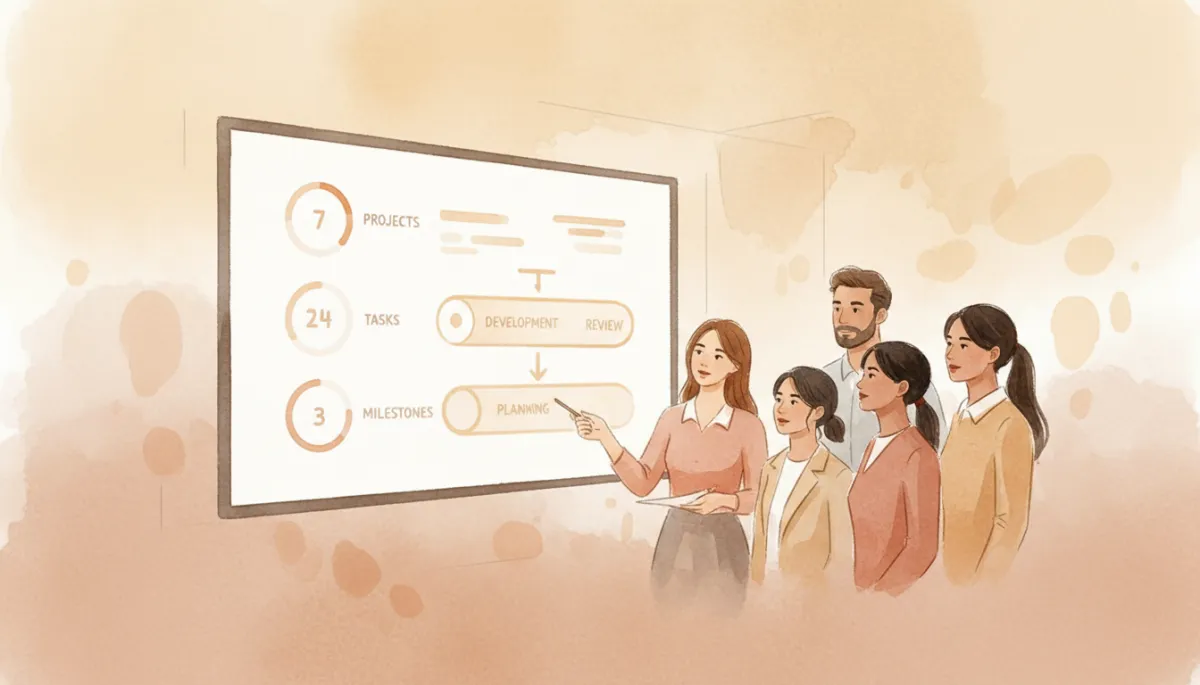
Focusing on a handful of clear signals cuts decision time and reduces daily chaos.
Rented Attention vs. Owned Systems: Stop Building on Someone Else’s Land
Many local businesses lean heavily on Rented Attention: social media platforms, marketplace listings, or third‑party apps that can change the rules overnight. Rented Attention is useful—you borrow the audience and tools of bigger platforms—but it’s fragile. Algorithm changes or policy shifts can cut your reach or break your workflows without warning.
The alternative is to invest in your Ownership Layer: the systems, data, and processes that you control directly. Examples of building your Ownership Layer include:
A customer database or CRM you can export, back up, and move if needed
Email and SMS lists you own, not just followers on a platform
Documented workflows stored in your own knowledge base, not only inside a vendor’s app
Rented Attention can fill the top of your funnel, but your real resilience comes from an Ownership Layer that keeps working even if one platform disappears. That’s the difference between a business that panics at every algorithm update and one that simply adjusts its inputs while its core system remains stable.
Infrastructure Thinking: Design Your Business Like a Reliable Utility
Infrastructure Thinking means treating key parts of your business the way a city treats water or electricity: as essential services that must be reliable, predictable, and well‑governed. Instead of asking, “Who will remember to do this?”, you ask, “What system guarantees this happens every time?”.
For local businesses, this mindset shift might show up as:
Automated reminders for renewals, follow‑ups, and recurring tasks instead of sticky notes and memory
Standardized onboarding for new staff, with checklists and training modules that don’t depend on one busy manager
Backup procedures and access controls so key data is never locked in one person’s laptop
When you apply Infrastructure Thinking, you are deliberately lowering Operational Entropy. You are building pipes, not buckets—flows that keep moving regardless of who is on shift today.
Civilization Memory: So Your Business Doesn’t Forget Its Own Wisdom
Every time your team solves a tricky problem, discovers a better way to handle a customer, or figures out a clever workaround, you’ve created value. But in many small businesses, that knowledge lives only in people’s heads. When they leave, your business forgets—like a civilization losing its written records. This is where Civilization Memory comes in: the deliberate practice of capturing, organizing, and updating what your business has learned.
Civilization Memory might look like:
A searchable knowledge base of FAQs, how‑tos, and playbooks your team can update in real time
Post‑mortem write‑ups after major mistakes or wins, focusing on what to change next time
Templates for emails, proposals, and responses that reflect your best thinking, not your rushed thinking
📌 Key Takeaway: A strong Civilization Memory ensures that every new hire starts where the last person left off, not from zero.
Trust Compression: Fewer Approvals, Faster Decisions, Safer Operations
In many local businesses, decision‑making is slow because trust is thin. Staff constantly seek approvals, owners re‑check every detail, and customers feel that nothing can happen without “the boss” weighing in. This is exhausting and caps your growth. Trust Compression is about designing Governance Rules and systems that allow trust to travel faster and further with less friction—without sacrificing safety or quality.
You compress trust when you:
Define clear decision limits (“You can discount up to 10% without asking”)
Implement checklists and quality controls that catch errors early
Use role‑based permissions in your tools, so people can act confidently within defined boundaries
The result: fewer bottlenecks, fewer “Can you just sign off on this?” interruptions, and faster service for customers—all because trust is embedded in the system, not only in personal relationships.
Governance Rules: Guardrails for a Calm, Predictable Operation
Governance is how you define who can do what, under which conditions, and how exceptions are handled. Many small businesses treat governance as a pile of unwritten assumptions. That works—until it doesn’t. As teams grow, unclear Governance Rules lead to conflict, duplicated work, and risky shortcuts.
Good Governance Rules are:
Explicit: Written down where everyone can see them
Simple: Easy to understand and remember in the flow of work
Enforced by systems: Reflected in your tools and workflows, not just in a policy document
For example, if your Governance Rules say that all large orders require a second check, your ordering system should automatically flag them and require two approvals. Governance encoded in systems reduces Operational Entropy and supports Trust Compression: people know the rules, and the tools help them follow those rules by default.
System Debt: The Hidden Interest You Pay on Bad Processes
Just like financial debt charges you interest over time, System Debt is the cost you pay for quick fixes and half‑built processes. Every time you say, “We’ll clean this up later,” you’re borrowing from the future. The interest shows up as repeated mistakes, staff frustration, customer complaints, and extra hours spent patching things up manually.
Examples of System Debt in local businesses include:
Using spreadsheets as a long‑term database instead of investing in a proper system
Relying on one person’s memory for key client details instead of capturing them centrally
Running parallel tools that don’t talk to each other, forcing double entry
💡 Pro Tip: Schedule a quarterly “System Debt review” where you list your top recurring headaches and choose one or two to fix properly. This is how you steadily lower Operational Entropy over time.
Leverage Layer: Multiplying Output Without More Hands
The dream for many local owners is simple: more output, same or fewer hours. The way to get there is to build a Leverage Layer into your operations. This is the combination of tools, automation, templates, and well‑designed processes that allow one person to do the work of three—without burning out or cutting corners.
Your Leverage Layer might include:
Automated scheduling and reminders that remove back‑and‑forth calls with customers
Standardized service packages and pricing instead of custom quotes for everything
Integrated systems where one update flows through to inventory, invoicing, and reporting automatically
When you design for leverage, each hour of human effort is amplified by your systems. That’s how you move from “more revenue means more chaos” to “more revenue flows through the same calm, predictable machine.”
Stability Loop and Operational Gravity: Keeping the System Grounded
Even the best systems drift over time. People find shortcuts, tools change, and new services are added. A Stability Loop is the habit of regularly checking, adjusting, and reinforcing your core processes so they don’t slowly fall apart. It’s not a one‑time project; it’s a loop that keeps running in the background of your business.
A basic Stability Loop could be:
Review key metrics and recurring issues in a short weekly meeting
Choose one small process to improve each month
Update your Civilization Memory and Governance Rules to reflect the change
Over time, this creates Operational Gravity: a pull toward order, clarity, and consistency. Instead of drifting into chaos, your default is to return to stable, well‑defined operations. New staff get absorbed into a strong field of habits and systems. Small problems get pulled down and resolved before they become crises.
Putting It All Together: A Practical Roadmap for Local Businesses
Building durable, owned, intelligent systems is not about buying the fanciest software. It’s about layering these ideas together in a way that fits your size and context. Here’s a simple starting roadmap:
Create a Shared Vocabulary. Introduce your team to terms like Operational Entropy, System Debt, Signal vs. Noise, and Governance Rules. Use them in meetings so everyone can see the same problems clearly.
Map your Ownership Layer. List the systems and data you truly own today. Where are you over‑dependent on Rented Attention or fragile tools you can’t control?
Define your core Signals. Choose 5–7 daily or weekly metrics that actually matter. Build simple dashboards or reports around those first, and reduce the Noise elsewhere.
Start a Civilization Memory hub. Pick a single place—an internal wiki, shared drive, or documentation tool—and begin capturing your best know‑how and decisions there.
Install a Stability Loop. Schedule recurring time to review operations, pay down System Debt, and refine Governance Rules. Treat this as non‑negotiable infrastructure work, not a “nice to have.”
As you follow this roadmap, you’ll notice a shift. Issues that used to feel personal (“Why can’t people just do their jobs?”) will start to look structural (“Our system doesn’t make the right path obvious.”). That’s the mindset of Infrastructure Thinking in action—and it’s where real leverage lives.
Conclusion: Build the System That Works Even When You’re Not There
Local businesses are the backbone of communities, but too many are powered by heroics instead of systems. When everything depends on the owner’s energy, attention, and memory, growth simply amplifies chaos. By embracing concepts like Operational Entropy, Compressed Coordination, Infrastructure Thinking, and Civilization Memory, you can design operations that compound output instead of consuming it in fire‑fighting and rework.
Durable, owned, intelligent systems don’t just make your business more efficient. They create a calmer workplace, clearer expectations, and a foundation you can confidently build on for years. They turn Rented Attention into lasting relationships, scattered information into Shared Vocabulary, and fragile workflows into a resilient Ownership Layer with strong Governance Rules and a powerful Leverage Layer on top.
The result is a Stability Loop and Operational Gravity that continually pull your business toward order, reliability, and resilience. Instead of being the person who holds everything together by sheer willpower, you become the architect of a system that holds itself together—and keeps multiplying value, even when you finally take that well‑deserved day off.